
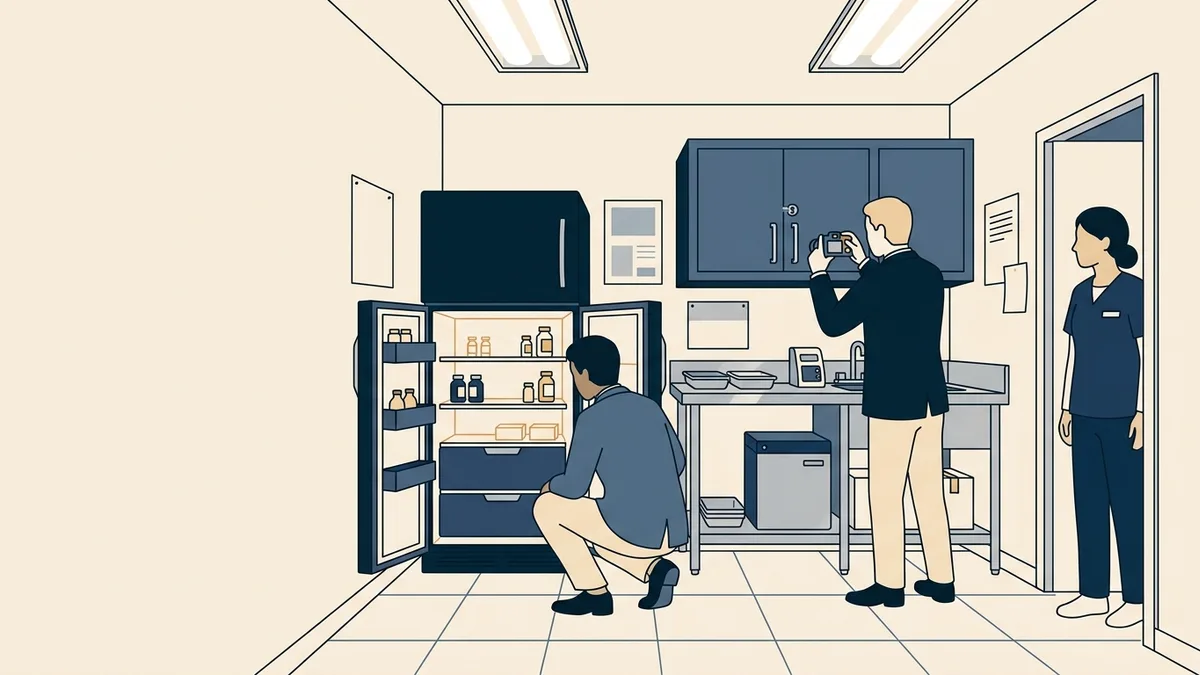
SAMHSA does not let an organization use its existing behavioral health accreditation for a new opioid treatment program. The OTP must show a separate application for accreditation as an OTP to a SAMHSA-approved body before it can receive provisional certification, and it must be surveyed against the federal opioid treatment standards in 42 CFR 8.12.
Many organizations that open an opioid treatment program (OTP) are not new to accreditation. They already run outpatient, intensive outpatient or residential programs accredited by CARF, The Joint Commission or Social Current (formerly COA). It is natural to assume the existing accreditation stretches to cover the new OTP. It does not, and SAMHSA says so plainly.
What does SAMHSA say about existing accreditation?
SAMHSA's FAQ asks the question directly: "Can a behavioral health or inpatient/outpatient treatment center use its existing behavioral healthcare accreditation in applying for the OTP provisional certification?" The answer is "No. An OTP seeking a provisional certification must provide evidence of a separate application for accreditation as an OTP," through one of SAMHSA's approved accrediting bodies.
The rule behind the answer is in Part 8. To be certified, an OTP must be "the subject of a current, valid accreditation by an Accreditation Body or other entity designated by the Secretary" (42 CFR 8.11(a)(2)), and an Accreditation Body is "an organization that has been approved by the Secretary in this part to accredit OTPs dispensing MOUD" (42 CFR 8.2). The accreditation that counts is the one granted under that approval, against the federal opioid treatment standards.
Why is the OTP survey different?
An OTP accreditation survey is defined as "an onsite or virtual review and evaluation of an OTP by an Accreditation Body for the purpose of determining compliance with the Federal opioid use disorder treatment standards described in § 8.12" (42 CFR 8.2). Those standards reach far beyond a general behavioral health survey: admission criteria, initial and periodic medical examinations, a diversion control plan, take-home dosing decisions and their documentation, drug testing at least eight random tests a year for each patient, and interim treatment rules.
The survey team is built for it. Part 8 requires at least two health care professionals whose combined expertise covers the dispensing and administration of controlled medications, the medical issues of dosing MOUD, psychosocial counseling of people in OUD treatment, and the organizational issues of running an OTP (42 CFR 8.4(h)).
When should the OTP accreditation application go in?
Early, because provisional certification depends on it. Only a new program that has "applied for accreditation with an Accreditation Body" can receive provisional certification, and the SMA-162 must state which body, the date you applied, the dates of any surveys and the expected schedule for finishing (42 CFR 8.11(d)). The survey itself happens later, once the program is operating. In practice the order is:
- Choose an OTP accrediting body and submit its application.
- File the SMA-162 for provisional certification, citing that application.
- Open under provisional certification once the state and DEA have approved.
- Complete the survey and accreditation within the provisional year, then apply for full certification.
Our post on provisional certification covers the year in detail.
Does the organization's other accreditation still matter?
Yes, for other purposes. State rules often care about the organization's general accreditation. Ohio, for example, requires accreditation from The Joint Commission, CARF, the Council on Accreditation or another body the director accepts for initial certification of a provider's services since October 3, 2023, and for renewals since October 1, 2025 (Ohio Rev. Code 5119.36(B)). Ohio issues an OTP license only to a certified community addiction services provider (5119.37(A)). So an Ohio program may carry two accreditations at once: one that supports its state certification, and a separate OTP accreditation that supports SAMHSA certification. See where accreditation is required.
Accreditation, of either kind, does not replace the state license. The state, SAMHSA, the accrediting body and DEA each approve the program separately.
After the first survey, how long does accreditation last?
The accrediting body's decision sets the program's certification clock. An OTP that meets 8.12 and has only minor conditions to correct is granted three years of accreditation; one with significant conditions is granted one year, extended by two more if it corrects them on schedule (42 CFR 8.4(b)(3)-(4)). SAMHSA then certifies for up to three years, or for one year conditionally when the accreditor grants one year (8.11(a)(3), (a)(5)). See SAMHSA certification renewal.
How can we help with the OTP accreditation?
The OTP accreditation application is part of our Opioid Treatment Program Approval Package ($6,995 plus the state license package). If the organization also needs its general behavioral health accreditation, Accreditation Readiness is $2,995 for the first program and $995 for each added program, and a Mock Survey is $1,495. The organization applies and is surveyed; we prepare the policies and documents and coach the team. You pay the accrediting body directly. See pricing.
Common questions
- We are CARF accredited. Does that cover our new OTP?
- No. SAMHSA's FAQ says an OTP seeking provisional certification must provide evidence of a separate application for accreditation as an OTP, even if the organization already holds behavioral health accreditation.
- When do we apply for OTP accreditation?
- Before you file the SMA-162. Provisional certification is only available once you have applied, and the SMA-162 must name the accrediting body, your application date and the expected survey schedule.
- What does the OTP accreditation survey review?
- Compliance with the federal opioid treatment standards in 42 CFR 8.12, such as admission criteria, medical examinations, diversion control, take-home decisions and drug testing, plus the accrediting body's own approved elements.
Need Help with Enrollment or Licensing?
We prepare your Medicare enrollment, accreditation survey and state licenses in the order CMS requires, for your official to sign, and track every one to a decision.