
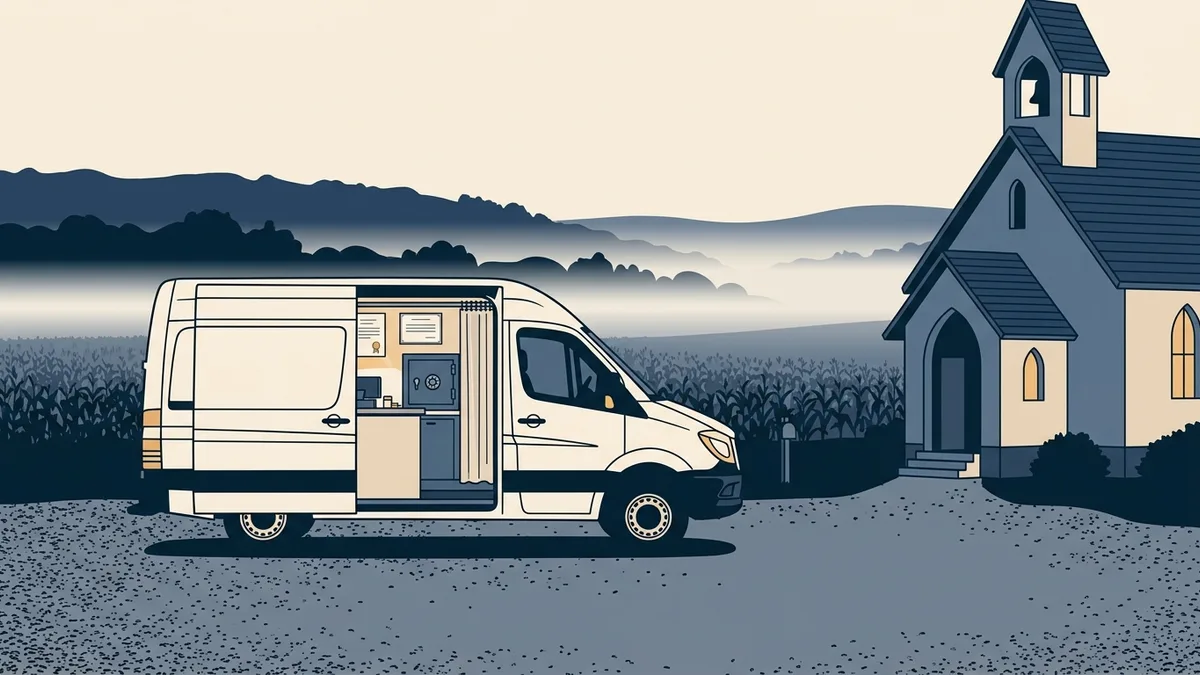
A certified OTP adds a medication unit, mobile or fixed, by filing Form SMA-162 for SAMHSA approval and meeting DEA's rules: a mobile unit needs the local DEA office's written approval and stays in-state, while DEA says a fixed unit needs its own registration. States vary; Pennsylvania's published rule prohibits medication units.
Medication units let an opioid treatment program (OTP) dispense closer to where patients live. Part 8 defines a medication unit as "an entity that is established as part of, but geographically separate from, an OTP from which appropriately licensed OTP practitioners, contractors working on behalf of the OTP, or community pharmacists may dispense or administer MOUD, collect samples for drug testing or analysis, or provide other OTP services," and adds that "medication units can be a brick-and-mortar location or mobile unit" (42 CFR 8.2).
Three agencies have a say: SAMHSA, DEA and the state. Each treats mobile and fixed units a little differently.
What can a medication unit do after the 2024 rule?
More than before. Under 42 CFR 8.11(h)(2), "any services that are provided in an OTP may be provided in the medication unit, assuming compliance with all applicable Federal, State, and local law, and the use of units that provide appropriate privacy and have adequate space." SAMHSA's "Become an OTP" page puts it the same way: medication units "can provide the same services as an OTP, where space allows for quality patient care," while required services not provided in the unit "must be conducted at the OTP."
Older guidance described units more narrowly, as places limited to dispensing and collecting samples. Some SAMHSA and DEA documents still use that language, including the list of statements SAMHSA asks for with a new unit. Plan the unit's services under the current rule, and confirm with SAMHSA's compliance officer and your state before offering counseling or other services there.
What does SAMHSA require?
A certified OTP must notify SAMHSA "by submitting form SMA-162" before establishing a medication unit (8.11(h)(1)), and SAMHSA's program-changes page lists the addition of a new unit, "brick and mortar or mobile," among changes that need SAMHSA approval, filed through the OTP Extranet. Its list of supporting documents for a new unit:
- A justification for the need to establish the unit.
- How the unit receives its medication supply.
- A statement that the unit is limited to administering and dispensing and collecting samples (the older wording noted above).
- A statement that "the sponsor agrees to retain responsibility for patient care."
- A detailed labeled floor diagram and a written description of the facilities.
- Patient totals for the primary facility and the unit, and those served only at the unit.
- The name and address of any units already attached to the primary facility.
Only the program sponsor may sign and submit the SMA-162. Relocating a unit later also needs SAMHSA approval on its own SMA-162. See SAMHSA's Form SMA-162.
How does DEA treat a mobile unit?
A mobile unit operates under the OTP's existing narcotic treatment program registration as a coincident activity, but only with written approval. The registrant "must notify the local DEA office, in writing, of its intent to do so, and the NTP must receive explicit written approval from the local DEA office prior to operating the mobile NTP. The mobile NTP may only operate in the same State in which the NTP is registered" (21 CFR 1301.13(e)(4)). Other conditions:
- No separate registration is needed for the conveyance, but vehicle information must be on file at the registered location, and state and local licensing and registration shown to DEA (1301.13(e)(4)(i)).
- The unit may operate at remote locations in the same state, including correctional facilities, unless the local DEA office directs otherwise (1301.13(e)(4)(iii)).
- It may not transfer controlled substances between mobile components, act as a collector, or function as a hospital, long-term care facility or emergency vehicle, and it "will not transport patients" (1301.13(e)(4)(ii)).
- It needs an installed safe and alarm, storage not accessible from outside the vehicle, and a return to the registered location at the end of each day with stock removed and secured, unless DEA grants an exception (21 CFR 1301.72(e)).
- It may be supplied only by the registered NTP that operates it (21 CFR 1301.74(n)).
How does DEA treat a fixed unit?
Differently. DEA's Narcotic Treatment Program Manual says a medication unit "is required to have a separate DEA registration as an NTP," citing the rule that each principal place of business where controlled substances are dispensed needs its own registration (21 CFR 1301.12(a)). DEA "will verify the medication unit's SOTA and SAMHSA authorization prior to approval," and the unit keeps separate inventories, records, reports and security. For a brick-and-mortar unit, plan on a Form 363 application of its own; see DEA Form 363.
Do states allow medication units?
Not all of them, and not on the same terms. Part 8 says medication units "shall comply with all pertinent State laws and regulations" (8.11(h)(1)). Examples from state law we have read:
- Pennsylvania's narcotic treatment program rules, as published, say: "Narcotic treatment medication units are prohibited" (28 Pa. Code 715.25). Do not plan a unit in Pennsylvania without a change in that rule.
- North Dakota requires a separate state license for each medication unit location, and its rules include an assessment of need for the proposed location (N.D. Cent. Code 50-31-09).
- Mississippi applies its need determination to "initial and future satellite or branch locations" of an OTP (DMH Operational Standards, Rule 2.2(L)).
- Washington provides that "a mobile or fixed-site medication unit may be established as part of a licensed opioid treatment program" (RCW 71.24.590(7)). See our Washington page.
Check your state's OTP rule and ask the State Opioid Treatment Authority before buying a van or signing a lease.
What about Medicare billing from a unit?
CMS says people with Medicare "may get these services furnished by mobile vans," and for payment, services furnished from an OTP mobile unit are treated as if furnished at the OTP's registered physical location (42 CFR 410.67(d)(4)(ii)). Make sure your Medicare enrollment reflects your locations as CMS requires; see Medicare enrollment for OTPs.
In what order should a program add a unit?
- Confirm the state allows it and what state license, notice or need review applies.
- Design the unit: floor plan, privacy, safe, alarm and the waiting arrangement DEA requires.
- File the SMA-162 for SAMHSA approval.
- For a mobile unit, notify the local DEA office in writing and wait for written approval; for a fixed unit, apply for its own registration.
- Update policies: diversion control, transport, end-of-day return, and recordkeeping.
How do we help?
Our OTP Medication Unit service is $1,495 per unit: the state check, the SMA-162 attachments, the DEA notice or registration information, and the policy updates. The program sponsor signs and submits the SMA-162, an officer signs DEA filings, and the program pays every agency fee. We never offer a medication unit in a state whose rules bar one. See pricing and the OTP approval hub.
Common questions
- Does a mobile methadone van need its own DEA registration?
- No. It operates under the OTP's narcotic treatment program registration, but only after the program notifies the local DEA office in writing and receives explicit written approval, and only within the same state.
- Does a fixed medication unit need a separate DEA registration?
- DEA's NTP Manual says yes: a medication unit is required to have a separate DEA registration as an NTP, and DEA verifies its SOTA and SAMHSA authorization first.
- Can a medication unit provide counseling?
- Under the 2024 rule, any OTP service may be provided at a medication unit if federal, state and local law allow it and the unit has appropriate privacy and space. Some older SAMHSA and DEA guidance is narrower, so confirm before you plan services.
- Are medication units allowed in Pennsylvania?
- Pennsylvania's narcotic treatment program rules, as published, state that narcotic treatment medication units are prohibited (28 Pa. Code 715.25).
Need Help with Enrollment or Licensing?
We prepare your Medicare enrollment, accreditation survey and state licenses in the order CMS requires, for your official to sign, and track every one to a decision.