
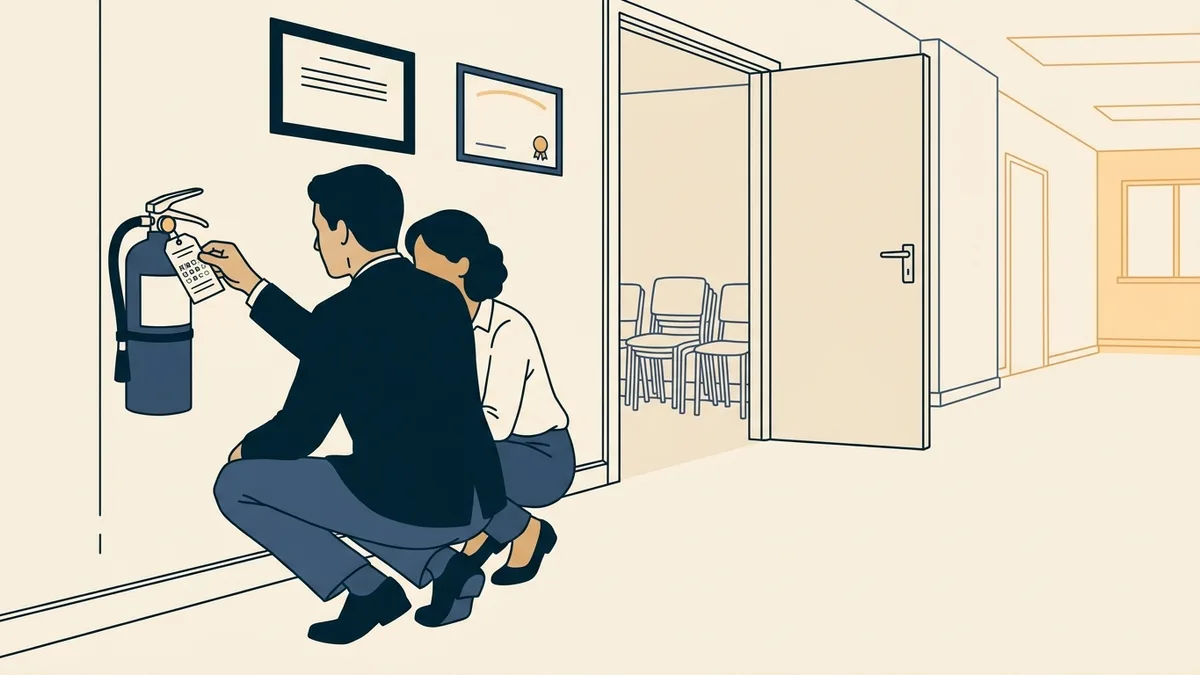
A mock survey should rehearse what real surveyors do: walk the building, trace high-risk policies into practice, interview staff and test records. Records are audited by your own staff with a checklist the mock surveyor provides, so patient charts never leave the program. Each finding should name the standard, the observation, the fix, an owner and a date.
A mock survey is a practice run of an accreditation survey or a state licensing inspection, done by someone who is not on your staff, far enough ahead that you can fix what it finds. Its value comes from realism. If it only checks that the policy manual exists, it will pass a program that the real surveyors will not.
Real surveys look at practice. CARF describes its surveyors as conducting the survey "by observing services, interviewing persons served and other stakeholders, and reviewing your documentation." State inspectors walk the building and check what the rule requires, and Medicaid agencies may make unannounced on-site inspections of any enrolled provider's locations (42 CFR 455.432(b)). A mock survey should test the same three things.
When should the mock survey happen?
Late enough that policies are written and in use, early enough to correct findings and let the corrections leave a record. For a CARF survey, that usually means before you file the survey application, which CARF recommends submitting at least three months ahead of your preferred window. A second, shorter check after the fixes is worth it when the first found many gaps. For an annual state inspection, schedule it a couple of months before the inspection window, and before any renewal that depends on accreditation (Indiana's regular certification expires 90 days after accreditation lapses, 440 IAC 4.4-2-3).
Which policies should it trace into practice?
Pick the policies that carry the most risk and follow each from the page to the floor:
- Confidentiality. Is the Part 2 Patient Notice posted "in a clear and prominent location" where people can read it without being identified as receiving substance use treatment, and on the website if you have one (42 CFR 2.22(c))? Are paper records kept "in a secure room, locked file cabinet, safe, or other similar container" when not in use (2.16(a)(1)(i)(C))?
- Complaints. Is there a working process to receive complaints, and can front-desk staff describe it? Part 2 requires one and bars retaliation (42 CFR 2.4).
- Crisis and emergencies. Can a counselor on an evening shift explain who to call and what to document? A CCBHC must describe its crisis methods in its policies and make them public (2023 criteria, 2.c.2).
- Medication handling, if you have it. Storage, counts, access lists and the documentation your state and DEA rules require.
- Incidents. Are incidents reported, reviewed and followed through the quality process your policy describes?
What should the building walk check?
The physical plant is where surveyors find the easiest citations. Walk every room the program uses: postings and notices, exits and emergency equipment, locked storage, cleanliness, accessibility, privacy in counseling rooms, and anything the state rule specifies for your level of care. Residential programs add bedrooms, kitchens and bathrooms. A building that has changed since licensure is a separate problem: many states need notice or approval before a program moves or changes space, so check that the licensed address and floor plan still match reality. See moving or opening another site.
Who should be interviewed?
Everyone a real surveyor might talk to. CARF's preparation guidance lists persons served, personnel, board members, funders, leadership and referral sources among possible interviewees. In a mock survey, staff interviews matter most:
- Can clinical staff explain the confidentiality rules, including when a patient's written consent is needed?
- Do they know the grievance and complaint process?
- Can they describe their own training and supervision, and does the file agree?
- Can leadership explain the quality improvement plan and show the data behind it?
- Does the board, or the advisory group a CCBHC uses, know what it has approved?
Interviews with people served are for the real survey. A mock surveyor has no business questioning patients.
How do you test records without handing over charts?
This is where many mock surveys go wrong. Surveyors do review clinical records, on site, under the program's own access controls. A mock survey should prepare for that without moving patient information outside the program. Part 2 programs must protect against unauthorized uses and disclosures of patient identifying information (42 CFR 2.16), and the simplest protection is not to disclose it to consultants at all.
The workable method is a checklist audit run by your own staff. The mock surveyor supplies the audit tool, built from the standards and the state rule (timeliness of assessments, signed treatment plans, consent forms that contain the elements 42 CFR 2.31 requires, discharge summaries), and trains your quality lead to apply it. Your staff pull a sample, score it, and report the de-identified results. The mock surveyor reviews the results and the blank forms, not the charts.
What should the report look like?
A finding is only useful if someone can act on it. Each one should name the standard or rule, describe what was observed, rate the risk, and suggest a fix with an owner and a date. Group them by area so leadership can see whether the problem is one policy or a pattern. Then schedule the follow-up check.
Does a mock survey help with state inspections too?
Yes. State inspections run on their own rhythms: Pennsylvania renews drug and alcohol treatment licenses annually after an on-site inspection (28 Pa. Code 709.11(b)); Kentucky gives every outpatient and residential AODE an annual survey visit; New Jersey charges a $300 inspection fee at first licensure and every two years after; New York's OMH renews an operating certificate after an unannounced inspection. The same walk, interviews and record audit apply, with the state rule as the checklist. Accredited programs in deemed-status states still face complaint investigations, so readiness is not optional there either.
How do we run one?
Our Mock Survey is $1,495, on site or virtual, against the accreditor's standards or your state rule. It includes the building walk, staff interviews, a policy-to-practice trace, the record audit tool for your staff to apply, and a written findings report. It is also part of Accreditation Readiness ($2,995 for the first program, $995 for each added program). We never receive patient records and never stand in for the real surveyor; the accreditor or the state decides. If the gaps are mostly in the manual itself, read writing a policy manual to the state rule and the accreditor, and for the full sequence, getting ready for a behavioral health accreditation survey.
Common questions
- Should a mock surveyor review our patient charts?
- No. Real surveyors review records on site under your access controls. In a mock survey, your own staff should audit a sample with a checklist and share de-identified results, so patient identifying information is not disclosed to a consultant.
- How long before the real survey should a mock survey happen?
- Early enough to fix findings and let the fixes leave a record. For a CARF survey that usually means before filing the survey application, which CARF recommends at least three months before your preferred survey window.
- Does a mock survey help with state licensing inspections?
- Yes. The building walk, staff interviews and record audit apply equally, using the state rule as the checklist. Some states inspect every year, such as Pennsylvania for drug and alcohol treatment licenses.
Need Help with Enrollment or Licensing?
We prepare your Medicare enrollment, accreditation survey and state licenses in the order CMS requires, for your official to sign, and track every one to a decision.